By industry
  By role
  By use case
  Customer Success
  Implementation
  Training & Development
  Partner Program
  Partner Finder
  Flare Employee Benefits
 Hidden payroll work: 7 steps to audit your payroll process
Your payroll runs, but hidden spreadsheets and manual checks may be costing you more time…

 Platform
  Hire
Hire  Schedule
  Pay
Pay  Develop
  Plan
Plan AI adoption has happened. Now comes the hard part.
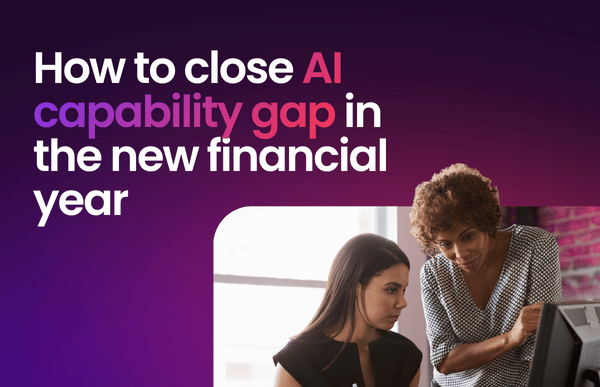
Last year, one in three Australian HR leaders predicted AI would be transformative. A year later, only one in seven say it delivered. In New Zealand, the divide is even starker: 40% anticipated transformation; yet only 18% saw it.
That gap between what we expected AI to do and what it actually did is the defining challenge of this new financial year.
ELMO’s 2026 HR Industry Benchmark Report (HRIB) surveyed over 1,200 HR professionals across Australia and New Zealand, and the story is consistent in both markets: we adopted AI, but we didn’t capture its impact.
Here’s the good news. The path to closing that gap is clearer than most organisations realise. It starts not with more technology but with a sharper and more intentional strategy.
Here are the top five priorities I would approach this financial year:
Most HR teams know they need to revisit their AI policies. Few are asking the harder question: who actually owns AI in our organisation?
Only 12% of Australian HR leaders and 17% of New Zealand HR leaders see themselves as the primary owner of AI transformation. The ambiguity of who sets the rules, who’s accountable is one of the biggest barriers holding organisations back from going deeper with AI.
In New Zealand, bias and fairness in AI has also emerged as a prominent concern. This is a maturity signal that tells us responsible implementation is front of mind as adoption scales.
A policy review this financial year isn’t just about updating documents. It’s the right moment to define governance frameworks, AI usage guidelines, and clear expectations around ethics and accountability, and to put a name against who owns it. This is where “human in the loop” is crucial.
HR can define guidelines and policies that emphasise the importance of augmented intelligence rather than full automation. By defining the guardrails on how people use AI tools without stifling innovation, HR can make it clear that employees are accountable for output generated by AI focusing on privacy and data security, accountability and can lead the creation of an accountability and reporting matrix.
Governance also has a cultural dimension that HR is uniquely placed to lead. Resistance to AI adoption is real, and it rarely surfaces in policy documents. The organisations navigating it well are the ones treating AI rollout as a change management challenge, not just a technology implementation. This means investing in communication, building psychological safety around experimentation, and being transparent about what AI is and isn’t being used for.
Once you’ve established who owns AI and set the guardrails, the next thing to think about is are you actually measuring whether any of it is working?
When HR leaders set performance goals, the instinct is to focus on what people will deliver. This year, I’d encourage every HR leader to go one step further: make sure at least one OKR per employee connects directly to the impact they’re creating through AI.
There’s a meaningful difference between asking someone to “use AI more” and asking them to articulate how AI has impacted their quality of work. The second creates ownership and encourages people to think critically about how they work using AI. The HRIB data demonstrates this clearly. Less than one in five Australian HR leaders say they can measure AI outcomes extensively. In New Zealand, only 20% can.
And when HR professionals were asked what skills would create the greatest impact over the coming year, the top answers weren’t about tool proficiency. They were about strategic workforce planning, predicting trends from data, and connecting HR outcomes to business goals.
AI can handle a remarkable amount of process and administration. But there are some things it simply cannot replace. In a world of proliferating AI tools, protecting those things has become one of HR’s most important jobs.
Self-reflection, the quality of a genuine performance conversation, the trust that forms between a manager and the team they lead — these are what constitute organisational resilience.
I see those human irreplaceable moments in every day practice. They live in the nuanced day to day realities of work life. Whilst AI may be able to analyse the sentiment of an employee in an engagement survey, it can’t sit in a room and notice the energy, and it can’t sense burnout in an employee’s voice.
AI can create script career pathways but if you reflect on your best career conversation you’ve had, it’s when a leader verbally backed you and saw potential in you that you hadn’t seen in yourself.
A note for people managers: If AI has saved you two hours this week on drafting, reporting, or scheduling, what did you do with those two hours? The highest-performing managers are using that saved time to have better one-on-one, give more specific feedback, coach a high performer or show up more present for their teams.
Before any organisation can invest wisely in capability, it needs to answer an honest question: what capabilities do we actually have today, and what will we genuinely need in 12 to 24 months?
This requires a real skills assessment, and the urgency is real. In New Zealand, upskilling, cross-skilling and reskilling employees is the number one organisational challenge for 2026. In Australia, it sits at number two.
The ambition to use AI strategically is there. Almost half of Australian HR professionals (46%) say the greatest future AI opportunity lies in workforce forecasting and planning. In New Zealand, performance and development support (42%) and workforce forecasting (41%) lead the pack.
However, you can’t navigate to a destination if you have no idea where your starting line is. With the stats above across ANZ, most organisations are realising their skills inventory is completely opaque. We need to understand across the workforce where the gaps are and where they will widen as AI shifts roles. If you want to practically kick this off, start small, test and pivot.
Select three roles that are:
Many organisations heading into FY27 are choosing to stay flat on headcount. This is a deliberate shift in where investment is actually going. Our HRIB data captures this trend in real numbers.
79% of Australian HR professionals anticipate workforce growth this year (a 4-point drop from 2025) and the average expected workforce increase has fallen from 19% to 15%. In New Zealand, a growing cohort (10%, up from just 4% last year) is planning to keep headcount flat rather than grow it.
Instead, the budget is moving into workforce capability. 62% of Australian HR leaders plan to increase AI technology spending this year, and 60% plan to increase investment in AI training and skills development. In New Zealand, 52% are increasing AI skills investment.
When talking to peers across ANZ, what is actually driving ‘smart headcount’ is redesigning work. It is about re-pointing your headcount costs and building on your talent capability by spending less on recruitment pipeline and investing in internal mobility through upskilling and AI literacy.
This is by far the smartest workforce investment now that AI is handling the heavy lifting on low value tasks, we’ve created room for employees to step up and by moving the budget to AI technology and skills development you’re creating a massive retention lever, keeping headcount flat and creating an empowered workforce.
The conversations I had across ANZ, the patterns I see in high-performing people functions, coupled with ELMO’s HRIB data are all pointing in the same direction. The organisations that will lead in FY27 are the ones that stay grounded in what their people need.
Stop measuring your organisation through AI adoption and start measuring what AI is enabling your people to do. Have clear goals, honest conversations, and investment in capability built to last. I believe that’s what defines a high-performing HR function in 2026.